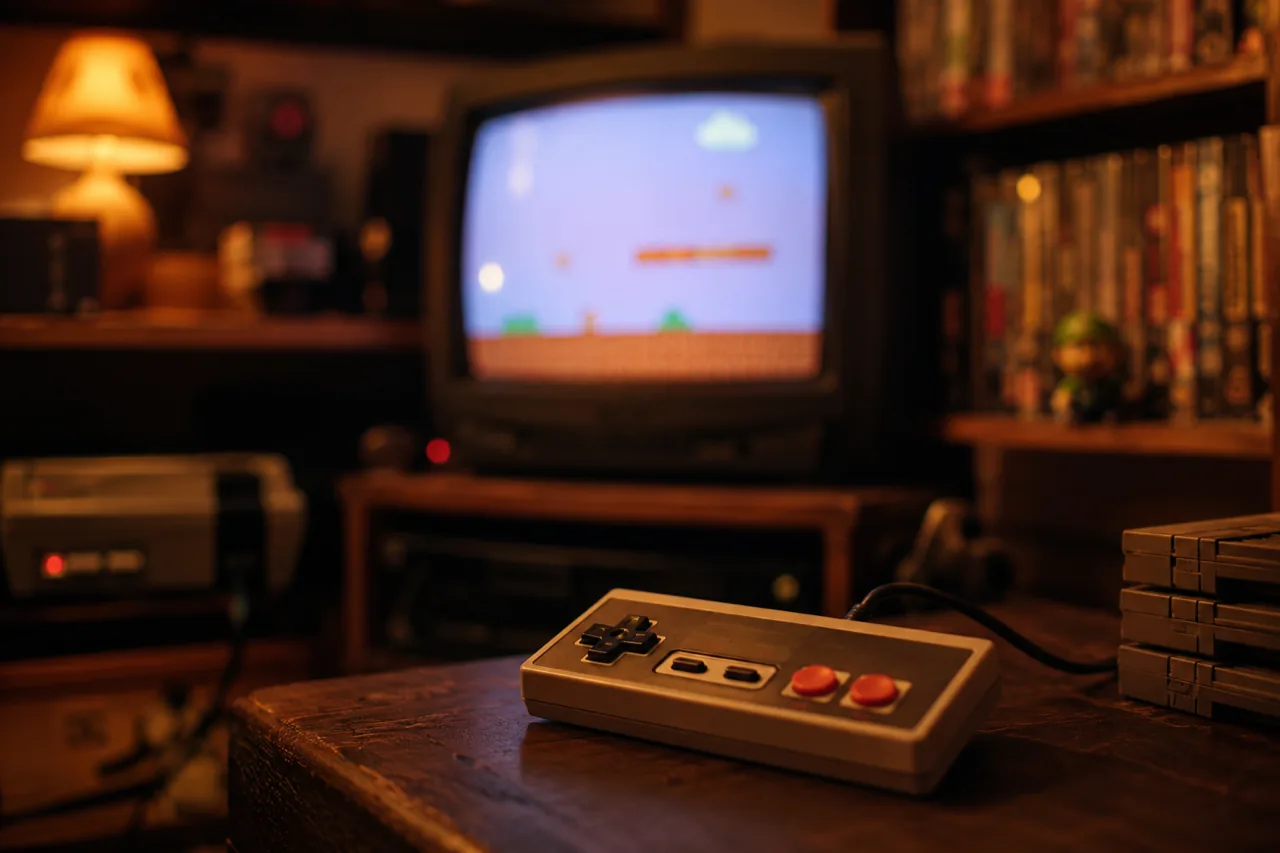
Every few years someone declares that retro gaming is just nostalgia wearing a cardigan, and every few years a brand-new indie game in 8-bit pixel art outsells half the photorealistic blockbusters around it. The pull of the old stuff is real, but it isn't only sentimental. There are design reasons these games keep clawing their way back into the present.
Constraints made them legible
When you only have a handful of colours and a few sprites to work with, every element on screen has to earn its place. That scarcity produced games you could read instantly — you always knew what would hurt you and what would help. Tracing the history of video games shows how those early hardware limits forced a clarity that a lot of modern, busier titles have quietly lost.
Nostalgia is the on-ramp, not the engine
Nostalgia gets people through the door, no question. A forty-year-old buys a mini console to feel sixteen again. But nostalgia alone doesn't explain why teenagers who never owned a NES happily sink hours into Shovel Knight or Celeste. Those players aren't remembering anything. They're responding to tight controls and honest difficulty, which are timeless regardless of when you were born.
Small enough to finish
There's also a practical kindness to older designs: they respect your time. A retro game often asks for an evening, not a hundred hours. In an era of bloated open worlds and endless checklists, a game you can actually beat in a weekend feels almost radical. Between their legibility, their honest challenge, and their merciful length, retro games aren't coming back out of mere fondness — they keep returning because, on their own terms, they still work.