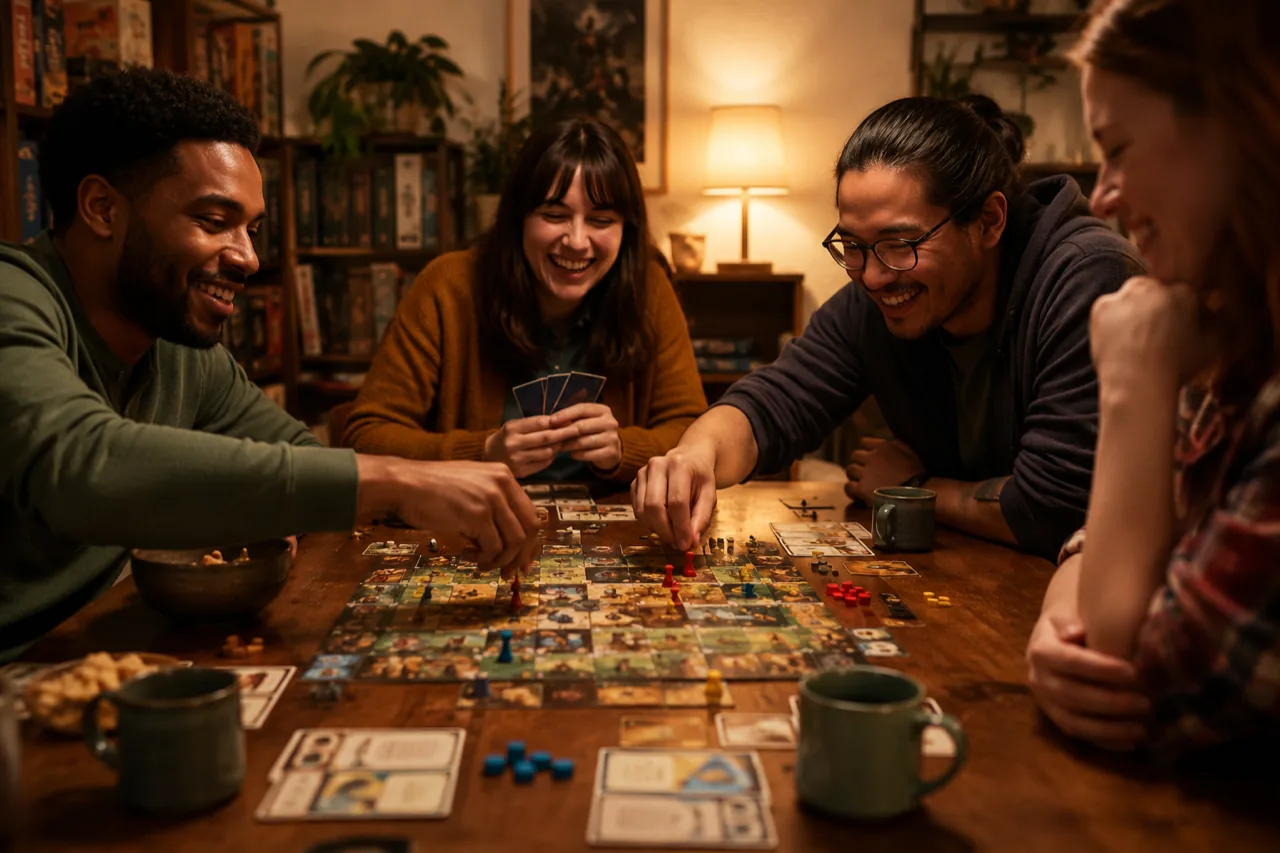
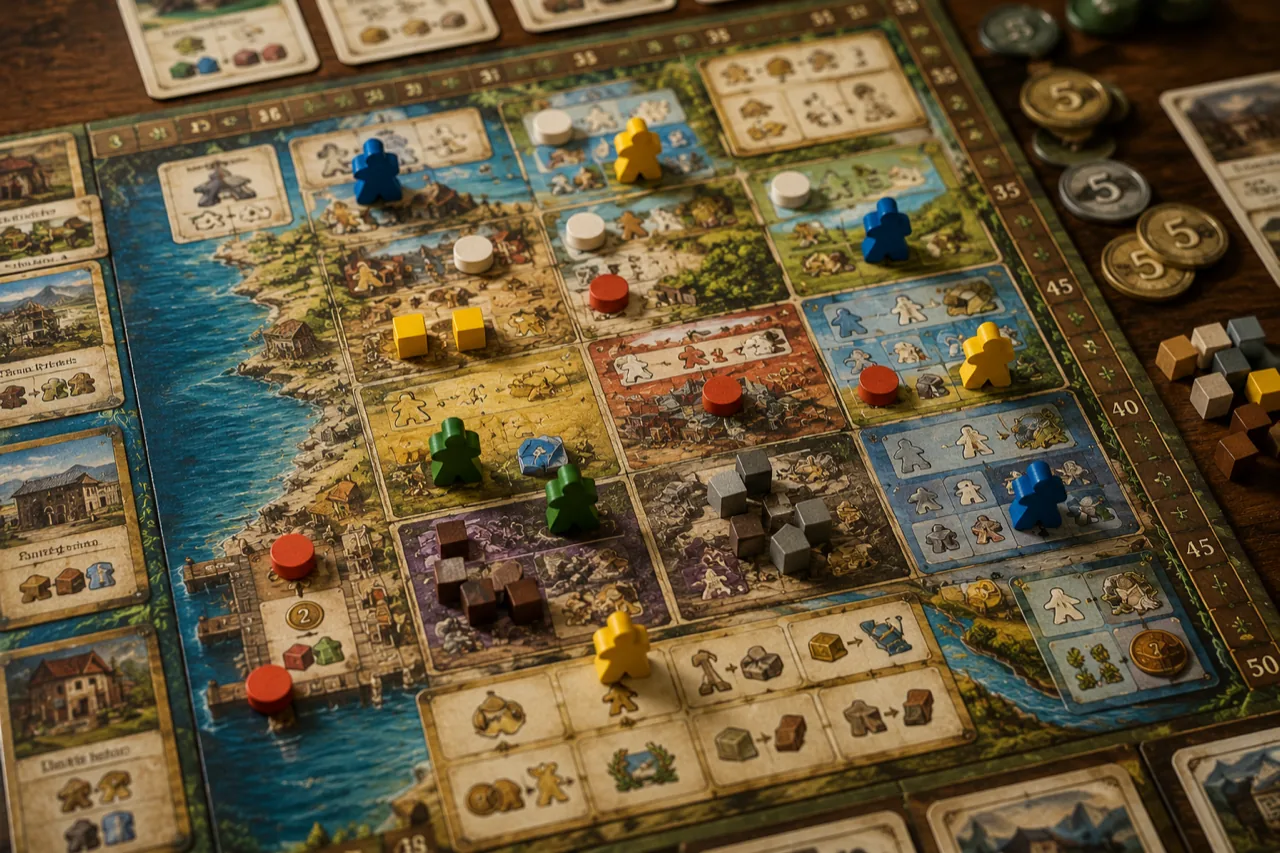
Worker placement is the genre that taught a generation of players to feel anxiety over a wooden cube. The pitch sounds almost boring: you place tokens on a board to take actions. But underneath that calm surface is one of the most elegant tensions in all of tabletop gaming — the spaces are limited, and once someone claims the one you wanted, it's simply gone.
Scarcity does the heavy lifting
Games like Agricola and Lords of Waterdeep work because they manufacture scarcity out of almost nothing. There are only so many action spots, and usually fewer than the players collectively want. The whole game becomes a quiet negotiation you're not allowed to speak out loud. You'd love to take the wood, but if you don't grab the bakery first, the player to your left certainly will, and then you're stuck for the round.
Reading the table, not the dice
Because there's rarely any randomness in placement, the real opponent is everyone else's plan. Strong players spend less time optimising their own engine and more time predicting which space their neighbours can't afford to lose. A well-timed "block" — taking a spot you don't even need, just to deny it — can swing a game more than any resource you collect. It's confrontation without conflict, which is exactly why people who hate take-that games often love this genre.
Why it ages so well
Worker placement has stayed popular for nearly twenty years because it scales with the people at the table. New players see a tidy puzzle. Veterans see a knife fight conducted entirely through meeples. The rules barely change between those two experiences, and that quiet depth — the sense that the same board rewards you more the longer you play — is what keeps these boxes coming back to the table.