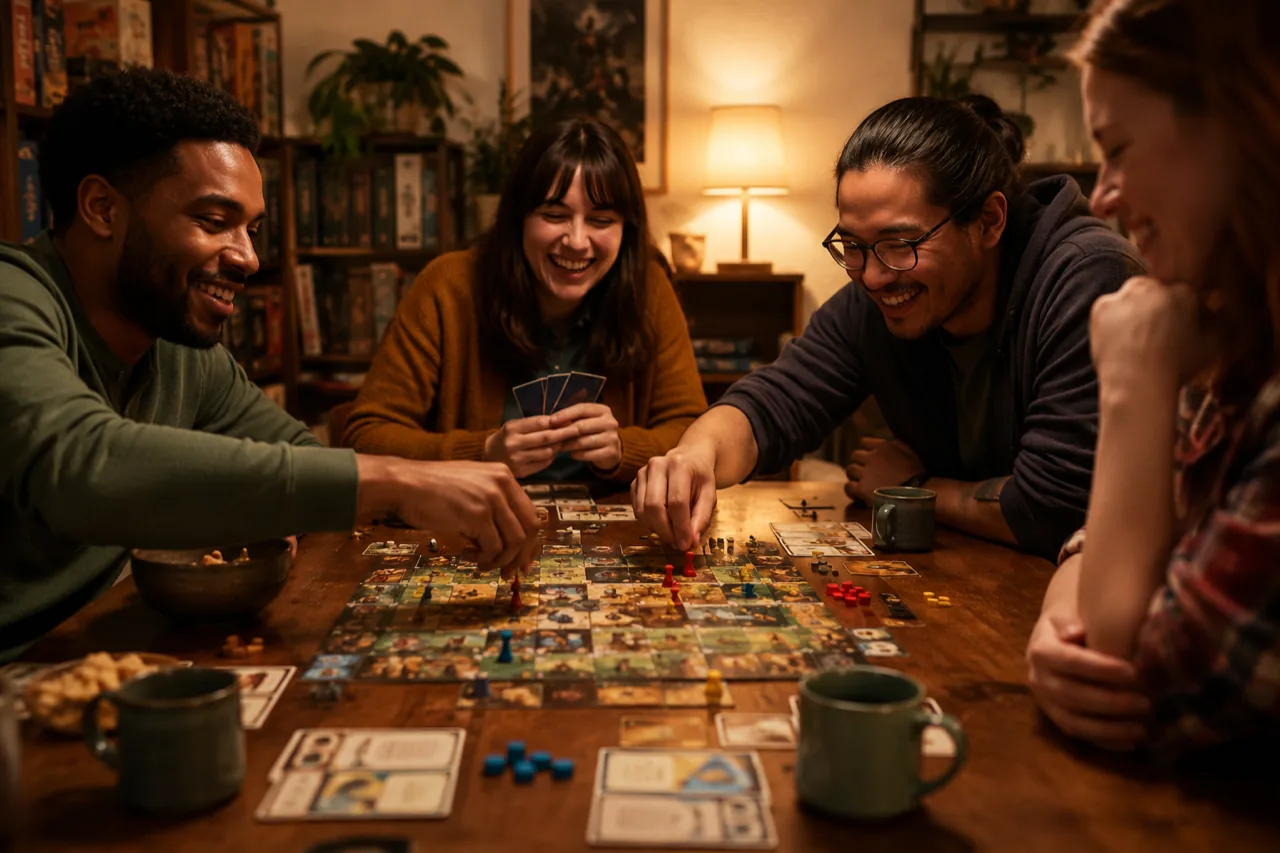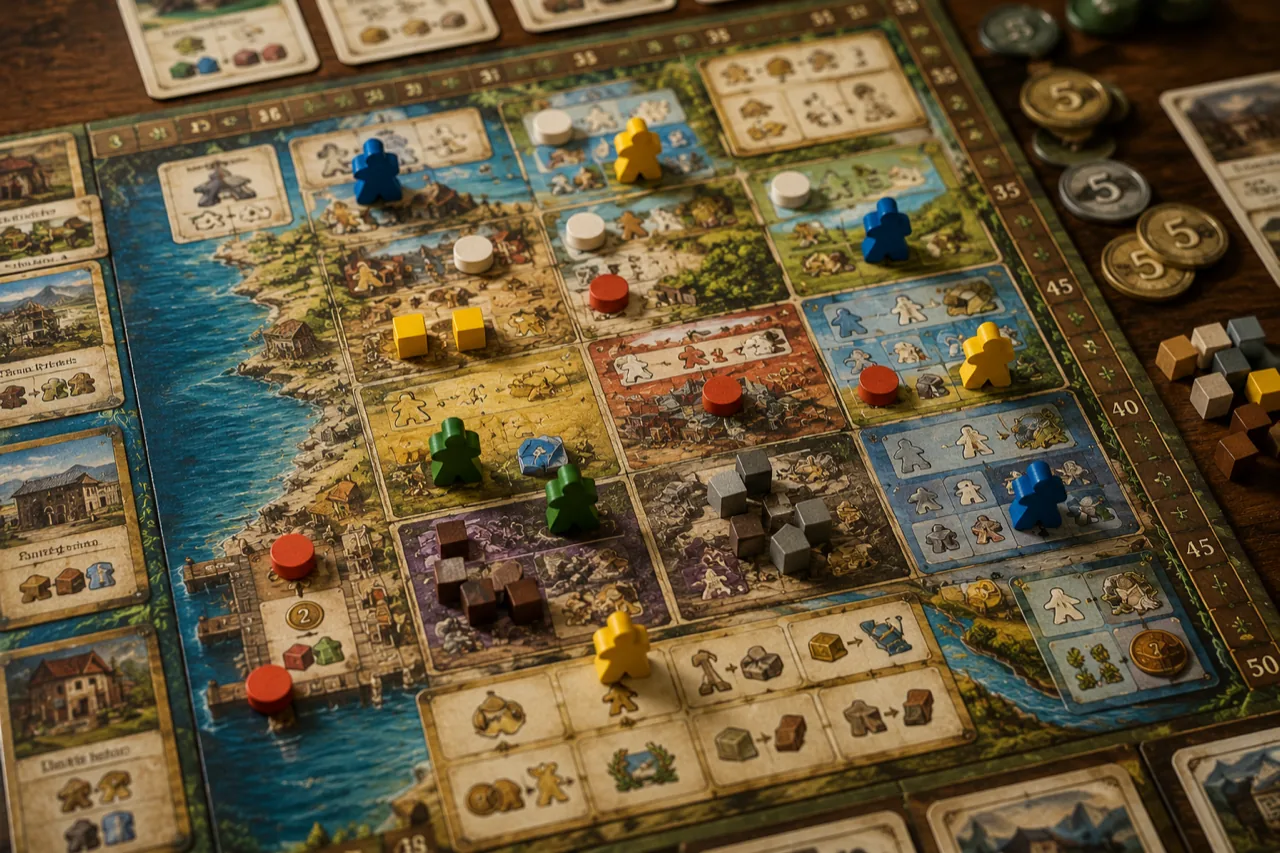
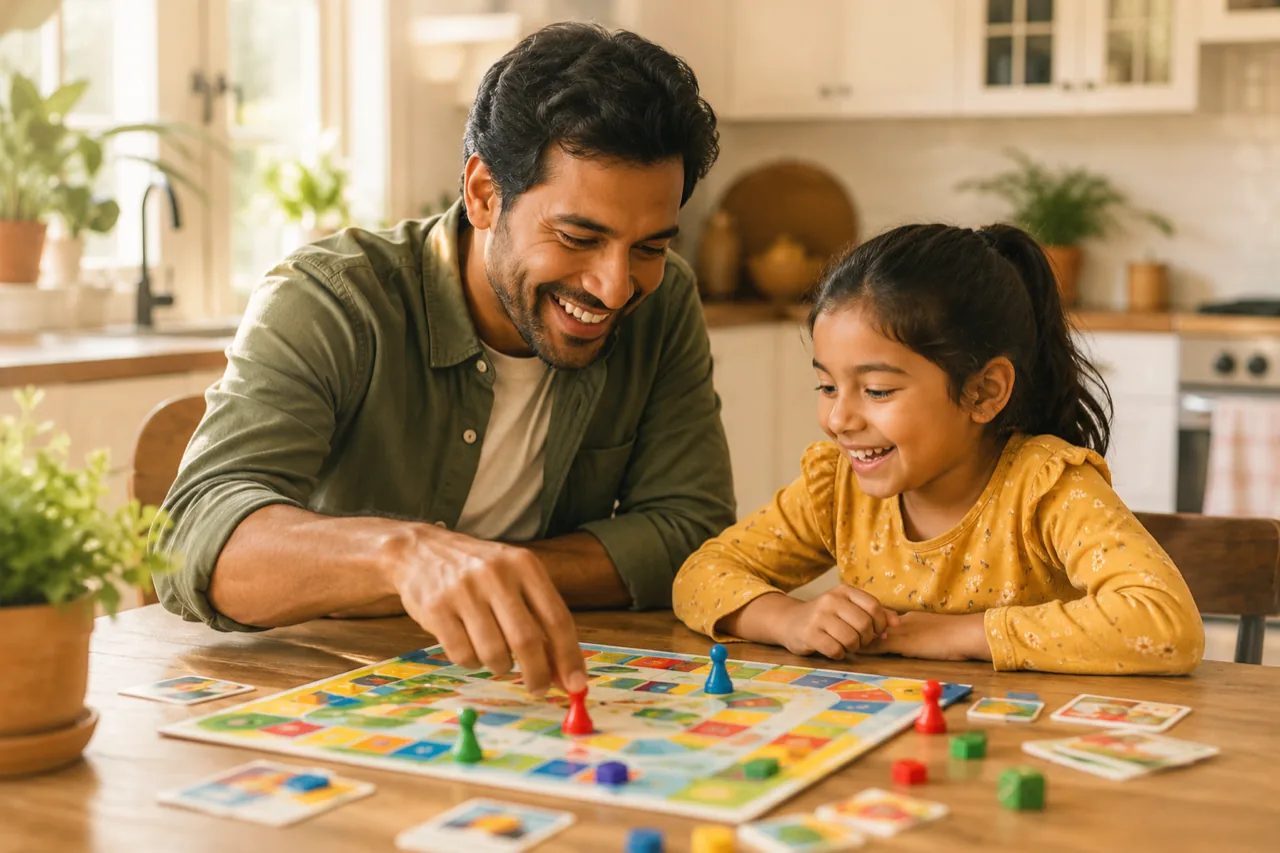
Ask a seven-year-old to practice adding up and you'll get a sigh. Hand them a game where adding up is how you buy the dragon, and suddenly they're doing arithmetic faster than you can check it. The oldest trick in educational design is also the most reliable: kids will happily learn almost anything if the lesson is hidden inside the fun of trying to win.
Rules teach patience by stealth
Before a game teaches any subject, it teaches how to play a game at all — wait your turn, follow shared rules, lose without flipping the table. Those aren't small skills. A simple title like Ticket to Ride: First Journey spends a whole session quietly drilling turn-taking and planning ahead, and the child thinks they were just collecting little train cards. The structure does the teaching while the theme does the convincing.
Numbers, words, and consequences
Once the basic discipline is there, games smuggle in the real content. Counting spaces, managing a tiny budget, reading a card aloud, weighing a risky move against a safe one — each is a lesson wearing a costume. The magic is that the feedback is instant and unsentimental. Make a greedy choice and you lose the round, no lecture required. Kids absorb cause and effect from a game far faster than from being told.
Pick the game, not the worksheet
The mistake well-meaning adults make is reaching for games that wear their education on the box, all flashcards and no fun. The better move is to pick a genuinely good game and trust that the thinking comes along for free. A child who loves playing will play again and again, and it's the repetition — not the label — that does the work. Get the fun right, and the learning takes care of itself.