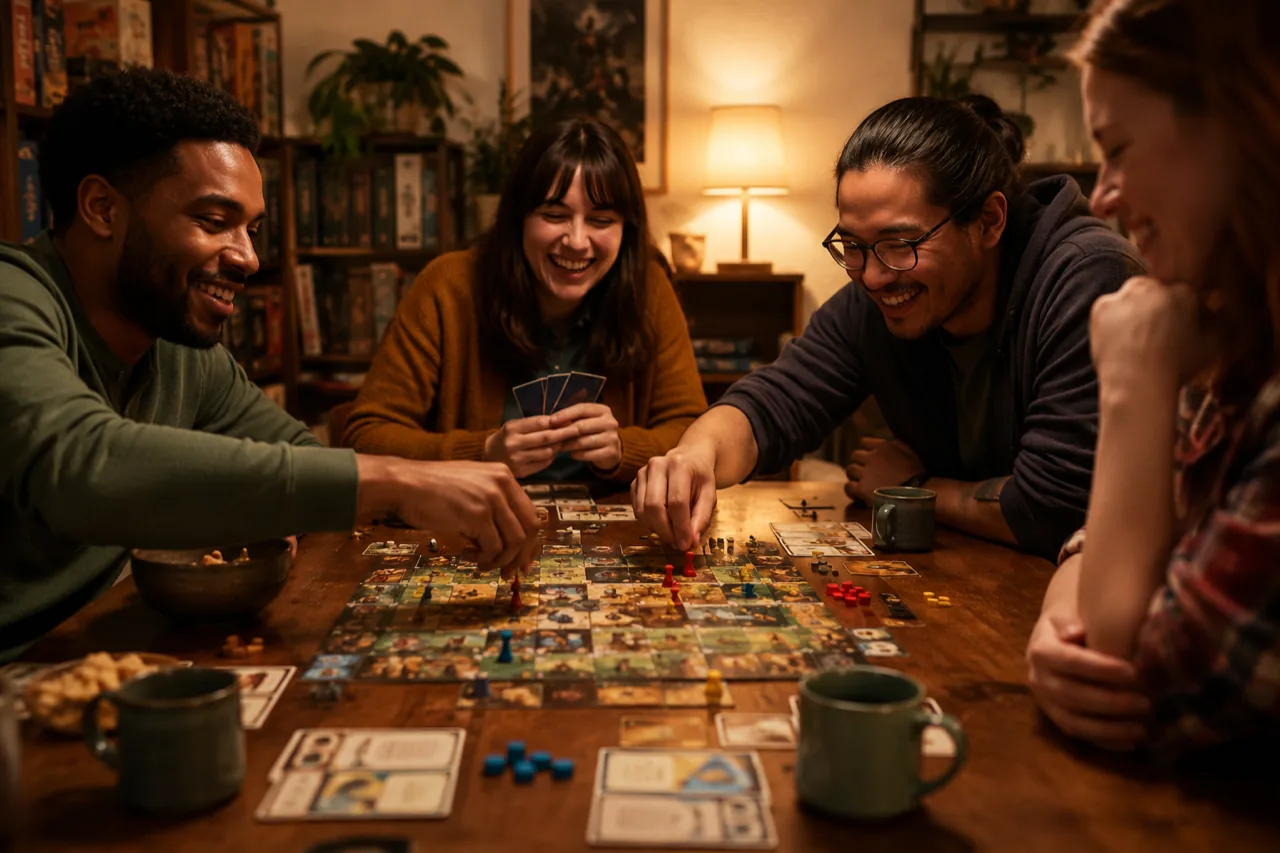
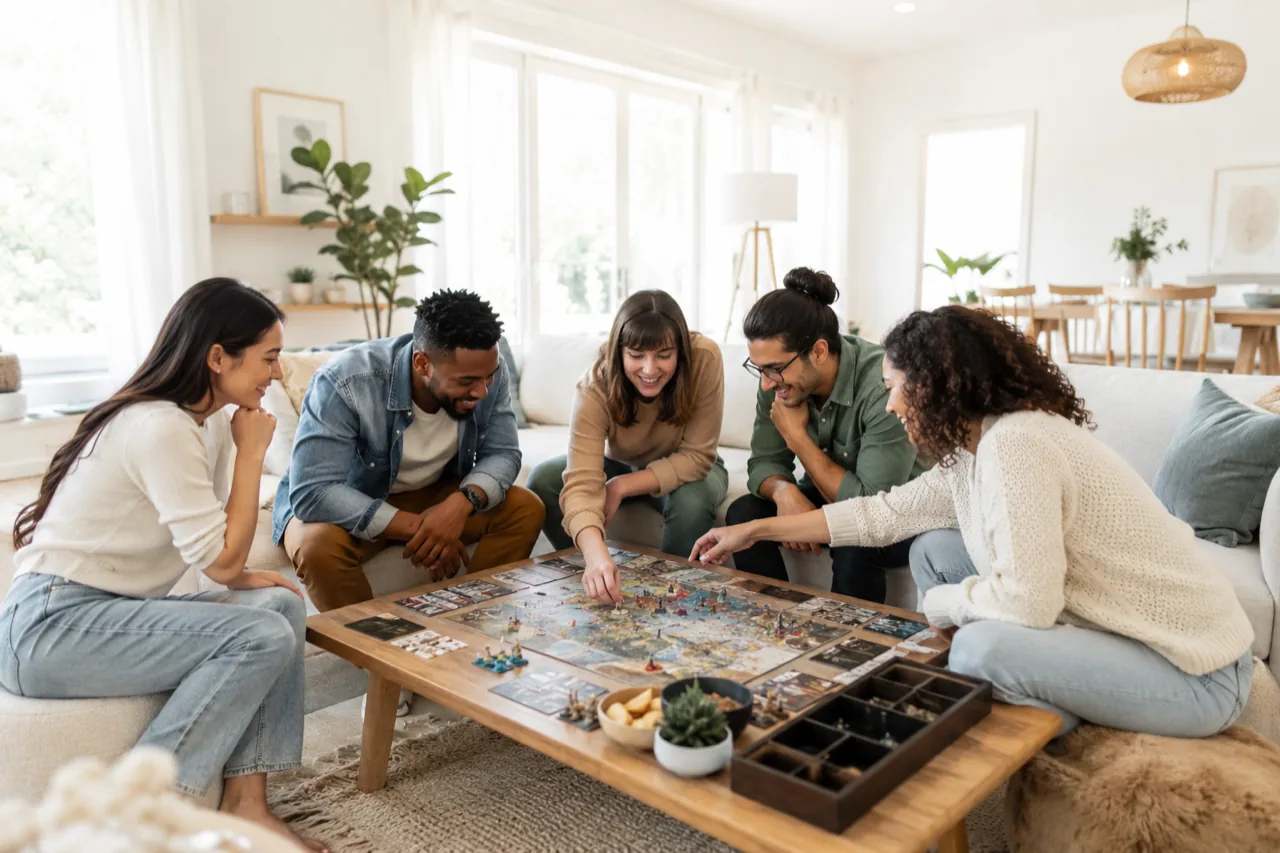
Not every table wants a winner. Some of the warmest game nights I've hosted ended with everyone either cheering or groaning together, because nobody was playing against anybody. The rise of cooperative board game design has quietly reshaped what an evening at the table can feel like, and it's won over a lot of people who swore they hated games.
Shared stakes lower the temperature
When you're all trying to stop the same outbreak in Pandemic or survive the same haunted house, the competitive edge that scares off some players just evaporates. There's no one to beat, only a problem to solve together. That makes co-op games an unusually good entry point for nervous newcomers, kids, and anyone who's been burned by a cutthroat game of Monopoly they'd rather forget.
The quarterback problem
Co-op design has one famous flaw: the loudest, most experienced player can quietly take over and tell everyone what to do, turning a team game into a solo game with witnesses. The best modern co-ops fight this with hidden information and hand limits — you literally can't show your cards, so you have to talk, persuade, and trust. When it works, that constraint turns the table into a genuine conversation rather than a lecture.
Winning and losing together
There's a particular joy in a co-op victory that competitive games can't reach: everyone gets to feel like they helped pull it off. And the losses sting in a softer, funnier way, because you all went down on the same ship. For groups with mismatched skill levels, or anyone who just wants an evening without a rivalry, co-op games are the most reliable way to send everyone home on the same side.